1. DO NOT start a Defense that is matched up against your Quarter-Back (QB): Think about it. You would be chipping away points from your own point total. It's not logical. Think about it some more. When your QB scores a TD you'll earn, we'll say 6 points. But your defense will lose about 3 points because of the points allowed (PA) category. In other words, you're taking 2 steps forward and one step back. EX: Don't start the Steelers Defense if you plan on starting Peyton Manning.
2. Drafting the right Quarter-Back (QB): I honestly think the QB position is the most important. However, that doesn't mean you have to draft a QB first. When drafting a QB, pick one that throws often and accurately. Obviously, these are important and a no huddle offense helps too (increased snaps lead to an increase in throws). More importantly, draft a QB that is on a team with a poor running game. A poor running game means more play action. More play action means more throws for your QB. The only exception to this rule is if the RB has high yardage after the catch or if the offense runs a lot of screen passes because your QB still get points in that case. EX: Aaron Rodger is a great QB on a team with a poor running game.
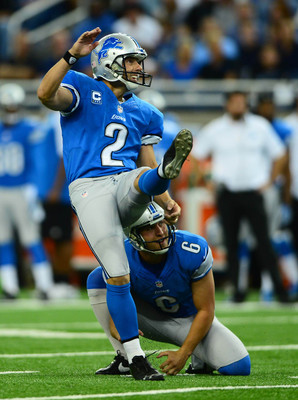
3. Drafting the right kicker: The kicker slot is just as important as any other slot. Sure, you can't expect him to get 20 points a game but the difference between averaging 3 points per game and 12 points per game can make a huge difference. Even more important, if your kicker scores 12 points per game consistently (9 points more realistically), the probability of scoring 15-20 point outliers is way higher. So when you pick a kicker, pick a kicker that is on a team with a poor Red Zone Offense. That's when a team's offensive is within 20 yards of the Goal Line. Poor execution in the Red Zone leads to more Field Goals. Having a powerful and consistent kicker always helps too. With kickers, quantity is more important than quality. This means that three 20 yard Field Goals is better than two 40 yard Field Goals. Also, if a kicker was good last year, he'll probably be good this year. EX: In 2011 David Akers was the highest scoring fantasy kicker (by a 36 point margin) on a team (the 49er's) with a 38.1% Red Zone success rate. And he's still ballin'.